
PHILIP MICHAEL MUSIC
ONLINE 1-1 GUITAR LESSONS NOW AVAILABLE-WHATSAPP/ZOOM
If you’re considering guitar lessons for a child or an adult, the first lesson is usually more about getting comfortable with the instrument than becoming technically advanced.
What happens after that depends on age, experience, goals, and how often they practise.? First lesson — children a good first lesson will often include: Getting to know the guitar — names of the strings, frets, tuning pegs, and basic parts. How to hold it comfortably — posture, hand position, and how to use a pick.
Playing some notes or simple chords — the teacher will choose something achievable quickly. A very simple tune or riff — ideally something recognisable to make the first lesson fun. Rhythm and strumming — basic counting and keeping a steady beat . A little music theory — usually introduced through the instrument rather than lots of written work. A practice task — something short enough that the child can succeed at it during the week. For younger children, lessons may be more game-based and broken into short activities. The teacher may spend quite a bit of time keeping them engaged rather than doing 30–60 minutes of continuous technical instruction. Going forward Lessons might gradually progress through Basic chords → simple songs → rhythm → chord changes → riffs/melodies → reading music or tablature → more advanced songs and techniques.
A child might eventually learn things such as :Open chords Power chords Scales Guitar tabs Reading standard notation Fingerpicking Barre chords Different strumming patterns playing along with backing tracks Improvisation Basic songwriting. The biggest factor is usually regular practice rather than long practice sessions. For a beginner child, 10–15 minutes several times a week can be much more useful than one long session that feels like a chore.? First lesson — Adult beginners often get a slightly more structured introduction.
The teacher will ask: Have you played guitar before? What kind of music do you like? Are you interested in acoustic, electric, or both? Do you want to play songs, perform, improvise, or understand music theory? How much time do you realistically have to practise? Then you might learn how to hold and tune the guitar. How to pick/strum.
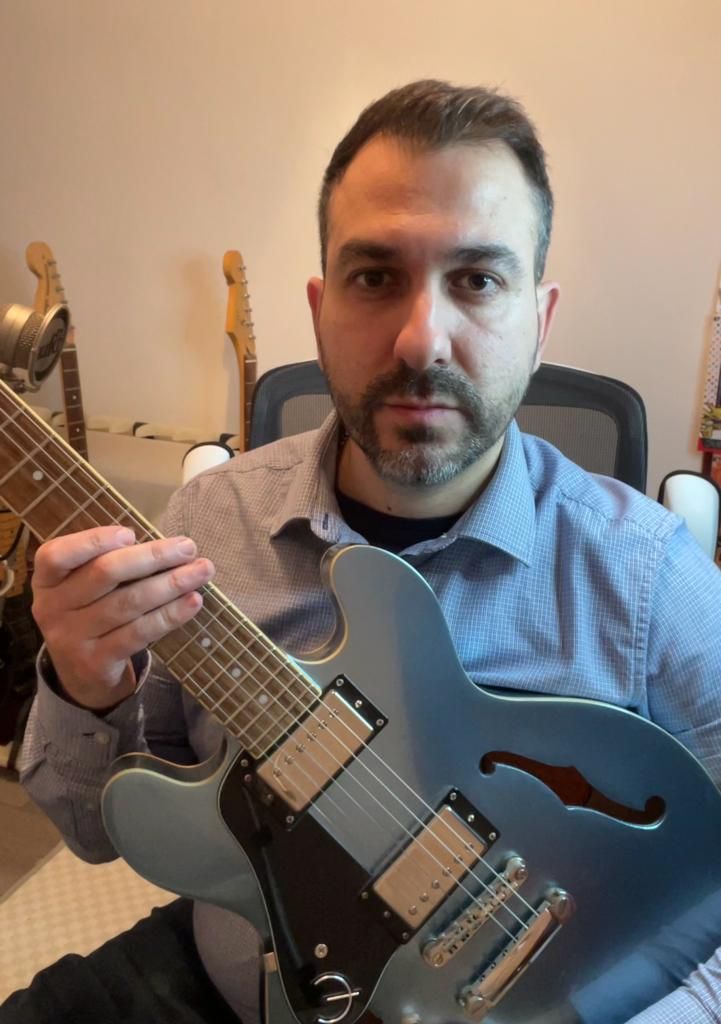
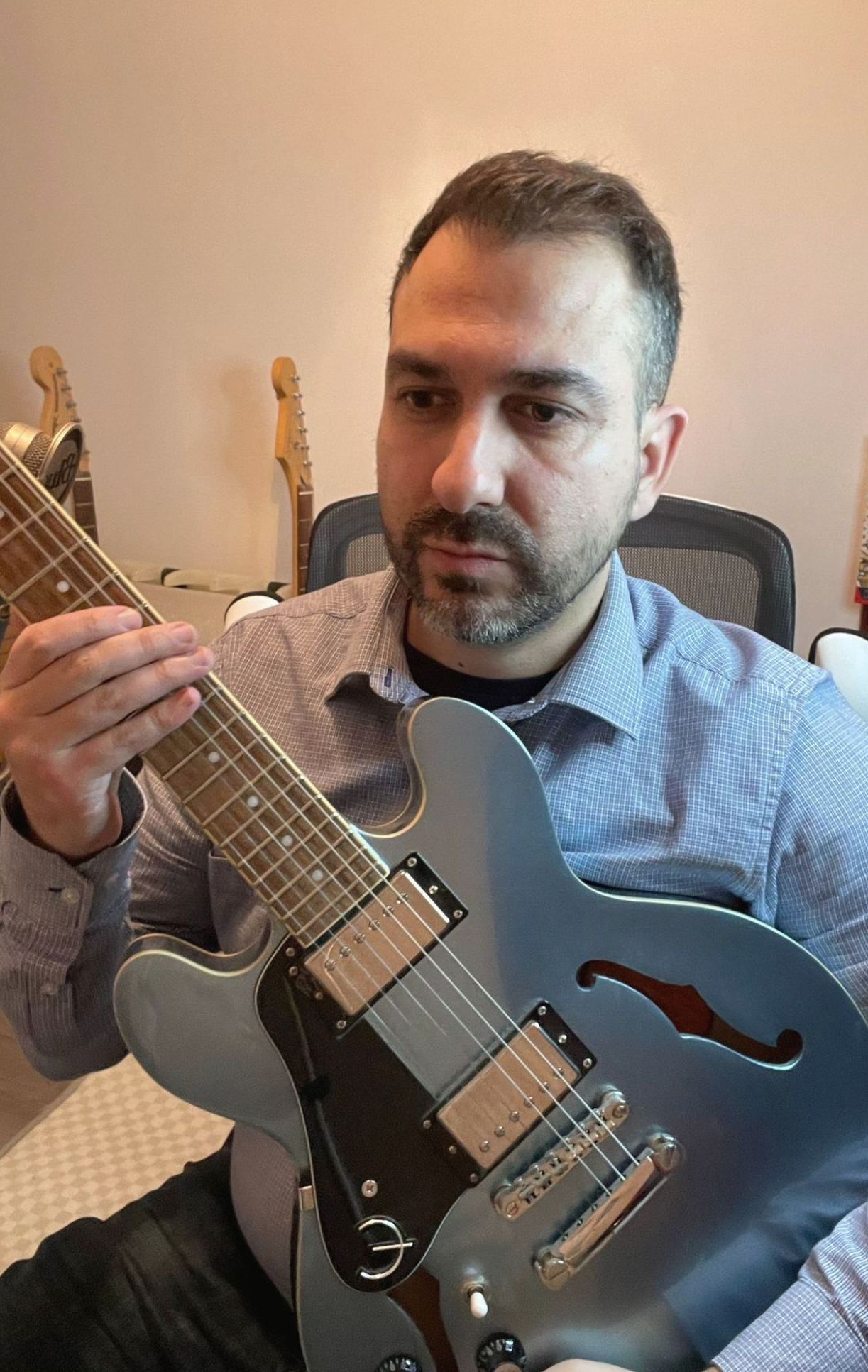
Beginner Guitar Lessons - Frequently Asked Questions
Most importantly, the guitar should be the correct size, easy to hold, and properly set up. What age should a student start guitar lessons? There is no single perfect age to start. Many children are ready for guitar lessons from around six or seven years old, although some can begin earlier with short, playful sessions and an appropriately sized instrument. Teenagers and adults can start at any age. No previous musical experience is required - just curiosity, regular practice, and a willingness to learn.
Obtain Music qualifications with Rockschool. Learn chart songs, modern and classic. Learn to read music and play graded songs. Music theory and different styles of music. Electric guitar and acoustic.
What do we do in the first guitar lesson? The first lesson is relaxed and tailored to the student's age, ability, and musical interests. We usually cover: How to hold the guitar comfortably The names of the guitar strings Basic tuning and instrument care Simple finger exercises The first notes, chords, or rhythm A short song or musical activity We also discuss the student's favourite music and learning goals. By the end of the lesson, the student will have clear, manageable exercises to practise at home.
Online tuition within the United kingdom. High definition sound and visuals.
Does the student need to own a guitar before the first lesson? It is helpful, but students should avoid buying a guitar that is uncomfortable or the wrong size. Advice can be provided on choosing a suitable beginner instrument. A well-fitted guitar makes learning easier and more enjoyable. How much practice does a beginner need? Short, regular practice is more effective than one long session each week. For most beginners, 10-15 minutes a day is a good starting point. Younger students may begin with just 5-10 minutes of focused practice.